If you are sourcing manicure sets for the first time—whether for a beauty brand, a gift program, a retail chain, or a hotel amenity line—China is almost certainly where your product will come from.
Over 70% of the world’s steel nail tools are manufactured in a single city in Guangdong province: Yangjiang. The factories there produce everything from budget promotional sets to premium private-label kits for global beauty brands. The challenge is not finding a supplier. The challenge is knowing how to evaluate one, what questions to ask, and what decisions to make before you place your first bulk order.
This guide is based on what we have learned after 10+ years of manufacturing manicure sets for trading companies and international buyers. We are sharing it because most sourcing guides online are written by aggregators, not factories — and there is a real gap between what buyers are told and what actually happens on the production floor.
Who This Guide Is For
This guide is written for:
- Beauty brand owners looking to launch a private label nail care line
- Gift and promotional buyers sourcing branded corporate or retail sets
- Retail and pharmacy buyers who need blister-pack or shelf-ready manicure kits
- Hotel and hospitality procurement teams sourcing amenity grooming sets
- Wholesale distributors adding nail tools to their product range
If you are a consumer looking to buy a single manicure set, this guide is not for you.
Why Chinese Factories — and Why Yangjiang Specifically
China’s dominance in nail tool manufacturing is not an accident. Yangjiang, Guangdong, has built a complete industrial ecosystem around precision metal tools over several decades: steel suppliers, forging facilities, grinding specialists, plating lines, leather case makers, and packaging suppliers are all within a few kilometers of each other.
This concentration drives down costs and shortens supply chains in ways that other manufacturing regions cannot replicate. A factory in Yangjiang can source stainless steel blanks, get them forged, ground, plated, assembled with a custom leather case, packed in a branded box, and shipped — all without leaving the city’s industrial zones.
For buyers, this means:
- Lower landed costs compared to sourcing from other regions
- Faster sample turnaround because all components are local
- More flexible customization because factories are not dependent on distant sub-suppliers
- Decades of accumulated technical knowledge in nail tool metallurgy and finishing
Step 1 — Decide What You Actually Need Before You Contact Anyone
The most common mistake first-time buyers make is approaching factories before they know what they want. This leads to vague conversations, inaccurate quotes, and samples that do not match expectations.
Before reaching out to any supplier, define the following:
Product type: Are you looking for a 4-piece travel set, a 7-piece complete manicure kit, or a pedicure-focused set? The tool count and configuration directly affect pricing and case size.
Target price point: What does your end customer expect to pay, and what margin do you need? Work backward from your retail price to understand what you can afford to pay ex-factory.
Customization level: Do you need your logo on the case only (simplest, lowest MOQ), or do you need a fully custom outer box with your brand design (higher MOQ, longer lead time)?
Quantity: First-time buyers often underestimate how quantity affects unit price. Be realistic about your first order volume.
End market: Where will these sets be sold — a retail shelf, an online store, a hotel room, or a corporate gift bag? This affects packaging requirements, tool selection, and sometimes material compliance expectations.
Step 2 — Understand the Three Layers of Customization
OEM manicure set customization typically falls into three levels. Understanding which level you need will help you choose the right factory and set realistic expectations.
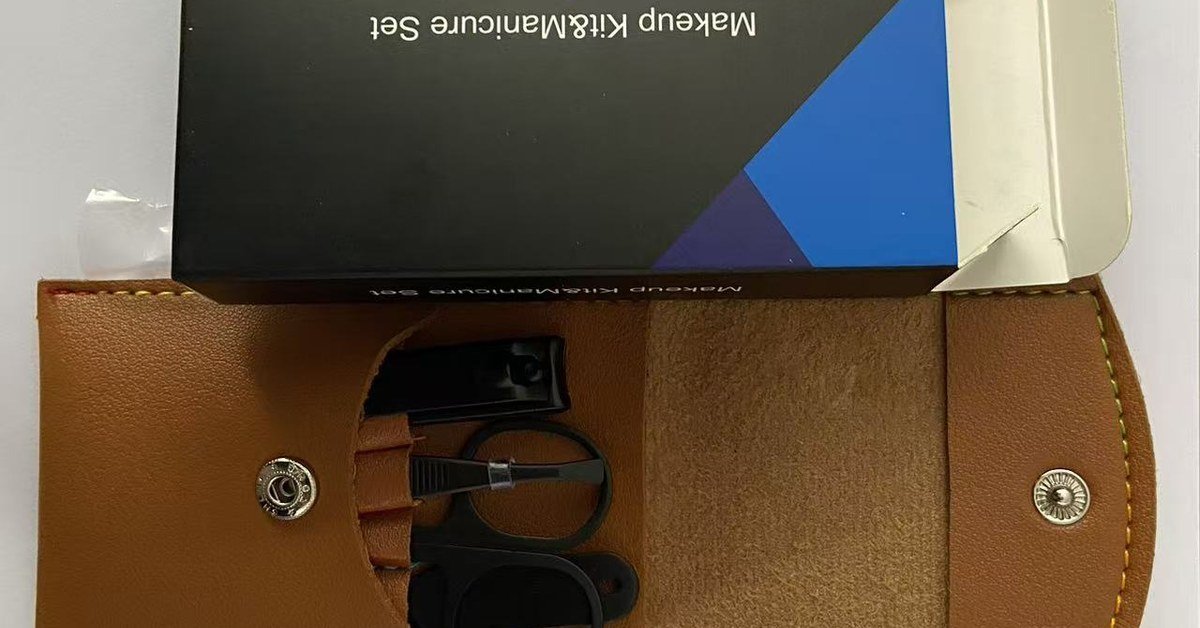
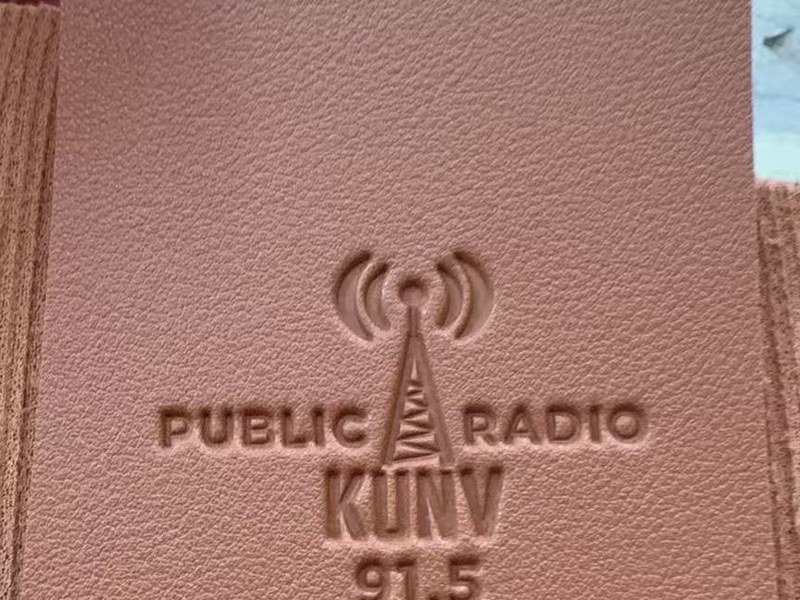
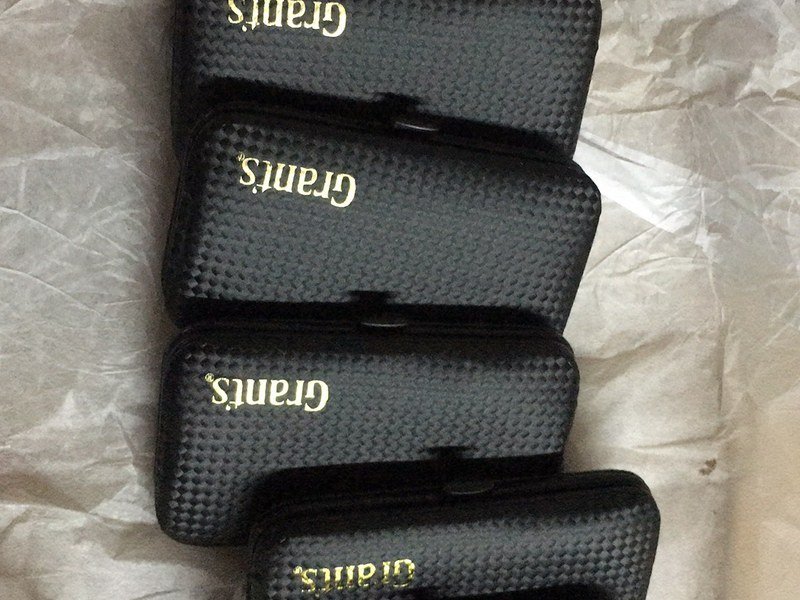
Level 1 — Logo on Case Only The factory’s existing leather case and tool configuration, with your logo embossed or hot-stamped onto the case. This is the fastest, cheapest customization option.
Typical MOQ: 200–500 sets Lead time after sample approval: 7–10 days Best for: New brands testing the market, promotional buyers, hotel amenity programs
Level 2 — Custom Outer Packaging Your logo on the case plus a custom-designed outer box (full-color print, with your brand, product description, barcode, and retail-ready design). The tools and case are still the factory’s standard configuration.
Typical MOQ: 500–1,000 sets Lead time after sample approval: 10–15 days Best for: Retail brands, pharmacy chains, gift sets for retail shelves
Level 3 — Fully Custom Product Custom tool specifications (different steel grade, finish, size, or handle design), custom case design, and custom packaging. This requires new tooling in some cases and significantly higher development investment.
Typical MOQ: 1,000–5,000 sets depending on scope Lead time: 60–120 days, including development Best for: Established brands wanting a differentiated product with genuine exclusivity
For most first-time buyers, Level 1 or Level 2 is the right starting point.
Step 3 — Evaluate the Factory, Not Just the Price
When you receive quotes from multiple suppliers, the lowest price is rarely the best starting point for evaluation. Here is what to look at instead.
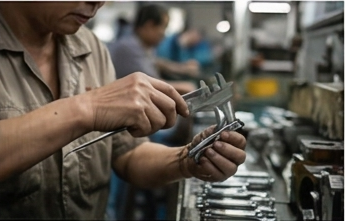
Do they manufacture in-house, or are they a trading company? Trading companies add a margin and do not control quality. Ask for factory photos, a business license, and a video walk-through of the production facility. A real factory will show you the forging line, grinding stations, and QA area without hesitation.
What steel grade do they use? For manicure tools, 420 stainless steel is the standard for blades and cutting edges. Carbon steel is sharper but requires more care against rust. Ask specifically what material is used for each tool in the set, not just the case.
How do they handle quality control? A credible factory will describe a multi-stage QC process: incoming material inspection, in-line sampling during production, 100% pre-packaging inspection for cutting tools, and final carton check before shipment. If they cannot describe this in detail, that is a red flag.
Have they shipped to your target market before? This matters for packaging requirements, labeling standards, and logistics experience. A factory that has only shipped domestically may not be familiar with import documentation requirements for your country.
Can they provide a pre-production sample? Any serious OEM supplier will offer a pre-production sample for your approval before running the bulk order. If a factory pushes you to skip this step, walk away.
Step 4 — Request Samples the Right Way
Samples are where most sourcing decisions are made or lost. Here is how to use the sample process effectively.
Request a sample of the closest existing product to what you want, not a custom sample on the first round. Evaluate the following:
- Blade sharpness: test the nail clipper on real nails, not just by eye
- Spring tension: the lever should feel controlled, not loose or stiff
- Plating quality: check for evenness, no bubbling or flaking at the edges
- Case construction: zipper or snap closure should feel solid; stitching should be even
- Logo placement and quality: if you sent a logo file, check alignment and ink/emboss depth
Provide feedback in writing with photos. Good factories will respond with specific explanations for any issues, not just “we will fix it.”
Step 5 — Understand the Timeline Before You Commit
New buyers consistently underestimate how long production takes. Here is a realistic timeline for a Level 2 custom order (standard tools, custom case logo, custom outer box):
| Stage | Typical Duration |
|---|---|
| Quote and negotiation | 3–7 days |
| Artwork submission and approval | 5–10 days |
| Pre-production sample | 10–15 days |
| Sample review and approval | 5–10 days |
| Bulk production | 20–30 days |
| Final inspection and shipping | 5–7 days |
| Ocean freight (to US/Europe) | 20–35 days |
Total: 10–14 weeks from first contact to product in your warehouse.
Plan your inventory accordingly. If you are launching a seasonal campaign, work backward from your in-hand date and add a two-week buffer.
Common Mistakes First-Time Buyers Make
Placing a large first order without a pre-production sample. Always run a small batch or get a production sample before committing to full volume.
Choosing the cheapest quote without understanding what was cut. Lower prices often mean thinner steel, lighter plating, or skipped QC steps. Ask what specifically was changed to arrive at the lower price.
Not specifying packaging requirements clearly. If you need a barcode, country-of-origin label, or specific box dimensions for shelf placement, state this in writing before production starts.
Expecting custom development speed at standard production prices. New molds, new leather case designs, and new tool specifications take time and cost money. Budget for it.
Not building buffer stock. Production delays happen. Plan for an 8–12 week reorder lead time so you are not caught with zero inventory.
Frequently Asked Questions
What is the typical MOQ for a custom logo manicure set? For logo embossing on an existing PU leather case, most factories accept MOQs of 200–500 sets. For a fully custom outer box, expect 500–1,000 sets minimum.
Can I get free samples? Standard product samples are typically free or charged at cost, with the buyer covering shipping. Custom-developed samples may carry a sample fee, which is often credited against the bulk order.
What is the difference between 420 and 440 stainless steel in nail tools? 420 stainless steel is the most common grade for manicure tools—it holds a good edge and resists corrosion well. 440 is harder and holds a sharper edge longer but is more expensive. For standard manicure sets, 420 is appropriate.
Do Chinese factories provide BSCI or other social compliance certifications? Some do, some do not. If your buyer requires BSCI, SGS, or REACH compliance documentation, ask specifically during your initial inquiry and verify before signing any purchase order.
How do I pay a Chinese factory safely? T/T bank transfer is the most common method. For first orders with a new supplier, 30% deposit before production and 70% before shipment is standard. Use a sourcing agent or request factory verification if you are ordering above USD 10,000 for the first time.
Final Thoughts
Sourcing a custom manicure set is not complicated—but it does require asking the right questions, setting clear expectations, and giving yourself enough lead time to do it properly.
The factories that will serve you best long-term are not always the ones with the lowest first quote. They are the ones that communicate clearly, back up their claims with real production evidence, and treat your first order as the beginning of a relationship rather than a one-time transaction.
If you have specific questions about tool configurations, MOQs, or what is realistic for your budget and timeline, we are happy to give you a straight answer.
Beautrix Tools is a factory-direct beauty tool OEM manufacturer in Yangjiang, China. We manufacture nail clippers, cuticle nippers, manicure sets, and grooming kits for brands, retailers, and gift buyers worldwide.